

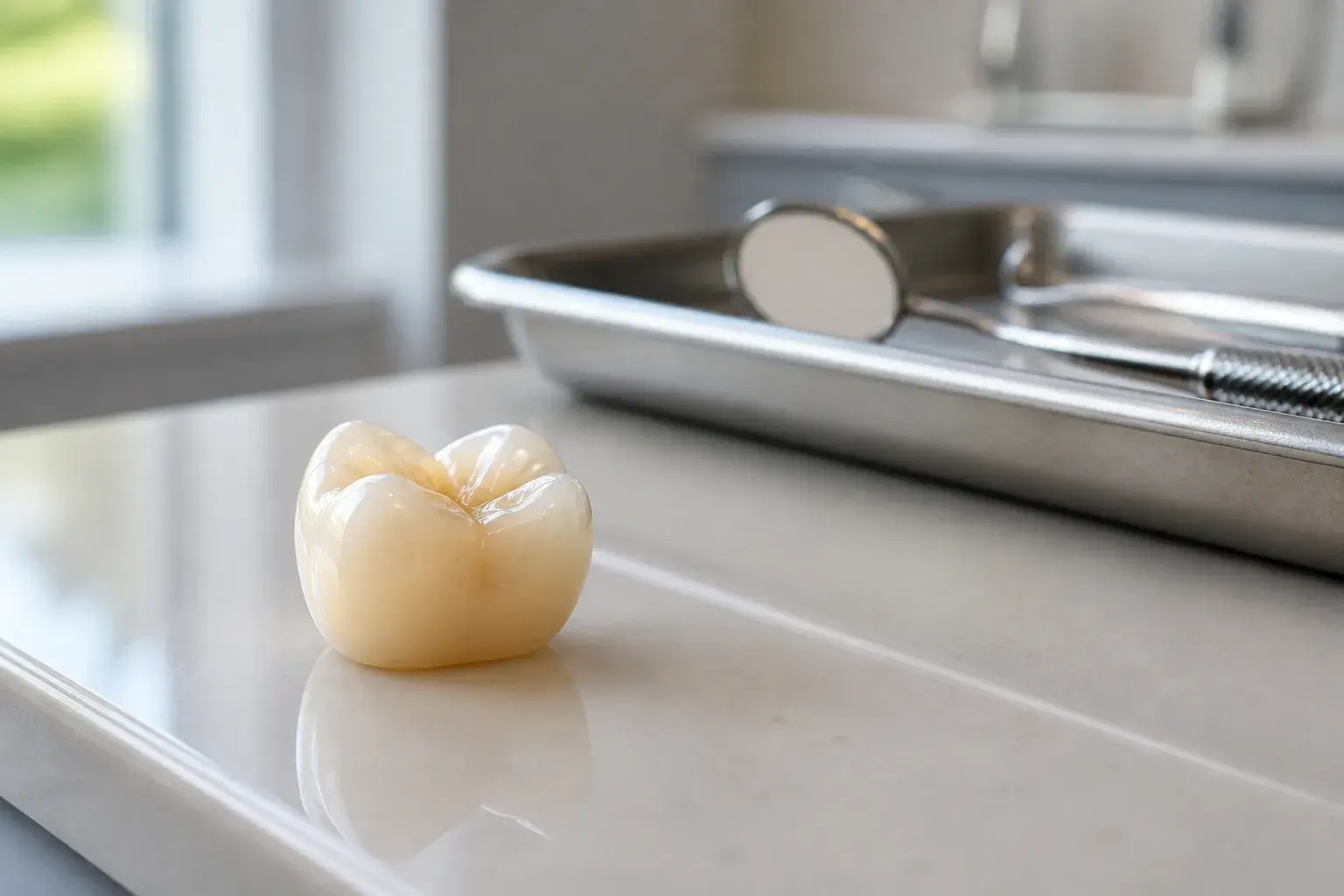
Crowns in Boise, ID
A weakened tooth can be protected and restored with a well-fitted crown.
If a tooth is cracked, worn down, or too weak to hold up under chewing, it can start making simple things harder than they should be. You may notice sharp edges, sensitivity when you bite, food catching where the tooth broke, or a darkened area that does not seem to improve on its own. A crown can cover the tooth, protect what is left of it, and let you use it more comfortably again.
At Alder Creek Dental, we help patients in Boise who want a steady fix without a lot of guesswork. We explain what the tooth needs, how a crown fits into the larger picture, and what your visit will look like before anything begins. If you are dealing with a tooth that feels fragile or looks different than it used to, the next step is a conversation and an exam, so we can help you decide whether a crown is the right choice.
When a crown helps
A crown is a custom cover that goes over a damaged tooth to restore strength, shape, and appearance. It is often used when a filling is no longer enough to support the tooth, or when the remaining structure needs more protection than a simple repair can provide.
Crowns are often a practical option when a tooth has been weakened by decay, fracture, or heavy wear. They can also help when a tooth has a large existing filling and there is not much natural tooth left around it. The goal is to keep the tooth in place and make it useful again for everyday eating and speaking.
Common warning signs
- Pain when chewing: Pressure can reveal that the tooth is unstable or cracked.
- Sensitivity to temperature: Cold or heat may reach the inner part of a weakened tooth more easily.
- Visible damage: A chip, crack, or worn edge can make the tooth more vulnerable over time.
- Repeated biting discomfort: If a tooth feels uneven or sore after meals, it may need more support.
Common reasons
A crown is not only for broken teeth. It is also used when a tooth needs reinforcement after repeated wear or when a repair must handle stronger biting forces than a filling alone can manage.
- Large decay: When decay removes too much tooth structure, a crown can replace the outer shape and help protect the rest of the tooth.
- Cracks or fractures: A crown can hold the tooth together and reduce the chance that the damage spreads.
- Worn teeth: Teeth that have been ground down or flattened may need extra coverage to function comfortably.
- After a root canal: A tooth can become more brittle after treatment, and a crown may help it last longer under regular use.
- Broken fillings: If a filling has failed or the tooth has weakened around it, a crown may be a better long-term solution.
For many patients, the decision comes down to whether the tooth still has enough structure to support itself. If not, a crown can be the next step that prevents more breakage and makes the tooth easier to live with.
What to expect
The process is usually straightforward, but it helps to know how the visit is organized. At Alder Creek Dental, we keep the steps clear so you understand what is being done and why.
Exam and planning
We start by checking the tooth and the surrounding bite. That lets us see how much of the tooth is sound and whether a crown is the most appropriate way to restore it.
Tooth preparation
If a crown is a good fit, the tooth is shaped so the crown can sit securely over it. The aim is to preserve as much natural tooth as possible while creating room for the restoration.
Impression and final fit
A custom crown is made to match the tooth’s size and bite. When it is placed, we check how it meets the teeth around it so chewing feels natural and balanced.
Follow-up guidance
We explain how to care for the crown and what to notice as you get used to it. A crown should feel like part of your smile, not like something you must work around.
Materials and fit
A crown should do more than cover a tooth. It should fit smoothly, support your bite, and blend in well enough that it does not draw attention during normal conversation or meals.
The right crown depends on where the tooth is, how much pressure it takes, and how the rest of your mouth lines up. Front teeth and back teeth often have different priorities, and we help you understand those differences before treatment begins.
What a good fit does
- Protects the tooth: It shields the weakened structure from further damage.
- Supports chewing: It spreads bite pressure more evenly across the tooth.
- Blends in naturally: It helps the tooth look like it belongs in your smile.
- Feels comfortable: It should not create a new rough edge or strange bite contact.
If a crown does not fit well, it can feel distracting when you bite down or talk. That is why careful shaping and placement matter just as much as the crown itself.
Daily care
A crown still needs regular home care, even though the outer surface is strong. The tooth underneath and the gums around it should stay clean so the restoration can stay comfortable and useful.
- Brush twice daily: Use a soft brush and gentle pressure around the crown and gumline.
- Floss carefully: Slide floss along the sides of the crown to remove trapped plaque and food.
- Watch hard habits: Avoid using the crown to open packaging or chew on objects.
- Keep routine visits: Regular cleanings and exams help us check how the crown and surrounding teeth are doing.
A crown can last a long time with proper care, but it still benefits from attention. If the bite changes, the edge feels rough, or the tooth starts to act differently, it is worth having it checked.
Crowns for families
Crowns are often associated with adult teeth, but they matter for families because one problem tooth can affect daily comfort for anyone in the household. A parent who avoids chewing on one side, or a child who sees a damaged tooth and feels anxious about treatment, both benefit from a calm explanation and a clear plan.
Alder Creek Dental serves patients from Boise, Meridian, Eagle, and Garden City, and our approach stays practical for busy households. We talk through what the tooth needs, what the appointment will involve, and how the crown fits into your longer-term dental care. For some patients, that means restoring a tooth after decay. For others, it means protecting a tooth that has already been weakened and needs support before the damage gets worse.
Whether the concern is a back tooth that hurts when you chew or a front tooth that looks chipped, the goal is the same: make the tooth stable again and reduce the strain it places on your daily routine.
Common questions
How do I know if I need a crown?
If a tooth is cracked, heavily filled, worn down, or painful when you bite, it may need more support than a filling can provide.
Will a crown change how my tooth feels?
A crown should settle into your bite so it feels natural, although there may be a short adjustment period while you get used to it.
Can a crown help a tooth with a large filling?
Yes, when a filling is too large to leave the tooth strong on its own, a crown can help protect what remains.
What if the tooth is sensitive but not visibly broken?
Sensitivity can be an early clue that the tooth has weakened, so it is worth having it checked before the problem grows.
Do crowns require special care?
No special routine is usually needed, but brushing, flossing, and regular cleanings remain important.
Can a crown be used on a front tooth?
Yes, crowns can be used on front teeth when appearance and protection both matter, and the fit should be planned carefully.
A clear next step
If a tooth feels unreliable, it is better to learn what is going on than to keep working around it. A crown may be the right answer when the tooth needs more support, more protection, or a more stable shape for everyday use.
At Alder Creek Dental, we make the process easy to follow from the first exam to the final placement. If you are in Boise and wondering whether a crown could help a damaged tooth, we are ready to take a careful look and explain your options in plain language.
How We Work
A Clear Dental Process From Start to Finish
Your visit starts with a careful look at your teeth and a conversation about what you need most right now.
- 01
Check Your Smile
We review your teeth and discuss any concerns, from routine care to restorative needs.
- 02
Explain The Plan
You get clear information about the recommended treatment and what it addresses.
- 03
Complete Care Carefully
We move through treatment with a gentle approach and attention to comfort.
FAQ
Common Dental Questions
If you are wondering about a visit, treatment, or what comes next, send us a message and we will help.
How often should I schedule a cleaning and exam?
Many patients do well with regular checkups, but your needs may differ. We can help you decide what schedule makes sense for you.
What happens during a filling appointment?
We remove the damaged area of the tooth and restore it with a filling material. The goal is to stop the cavity and protect the tooth.
When might I need a crown?
A crown may be recommended when a tooth is weakened, worn, or needs more protection than a filling can provide. We will explain why it is recommended before treatment.
Do you see children at both offices?
Yes, we provide children's dentistry for families in the Treasure Valley. Contact us to find the location that works best for your visit.
What if I have not been to the dentist in a while?
That is okay. We can start with an exam, talk through your concerns, and build a plan from there.

Get started
Ready to Book Your Visit
Reach out today and we will help you choose the right appointment for cleanings, fillings, crowns, or children's dentistry.
Call Today:(208) 555-0142